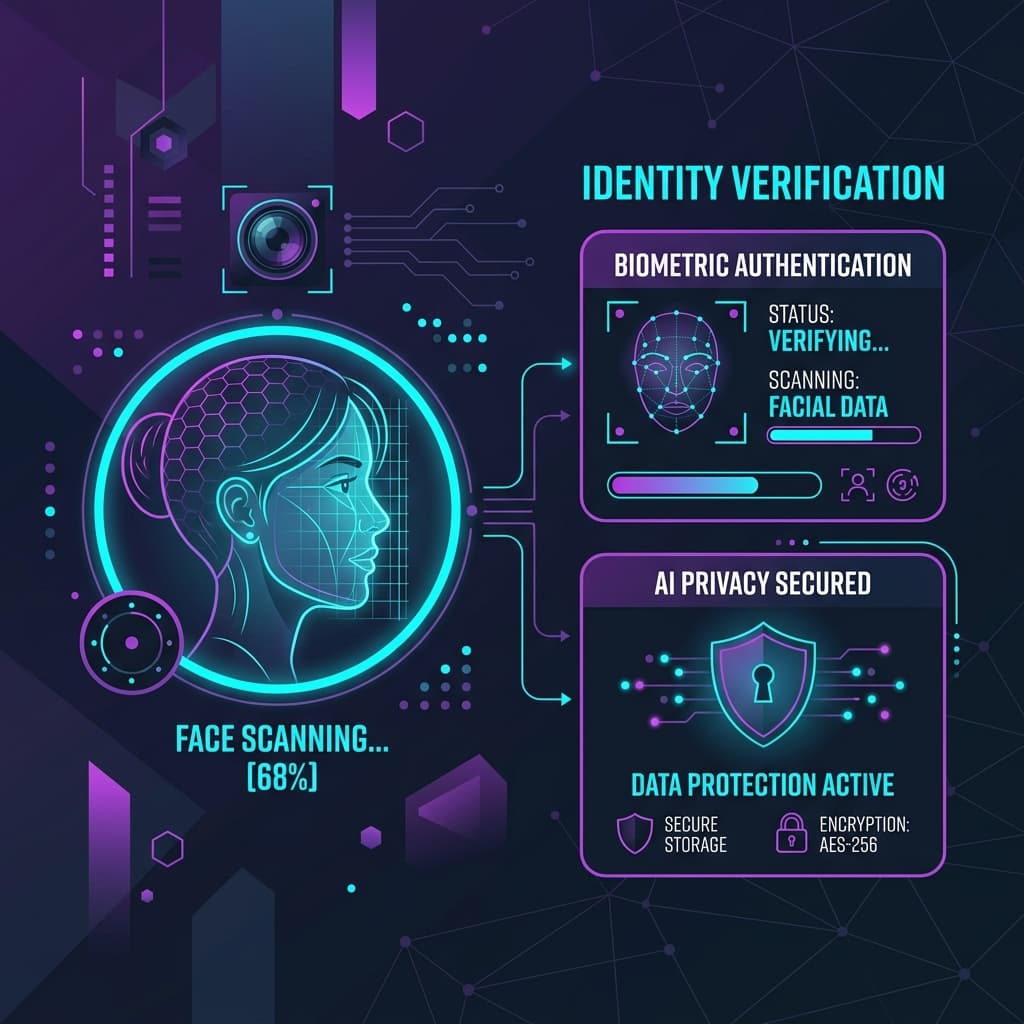

In a significant update to its user policies, AI safety and research company Anthropic has announced that its AI chatbot, Claude, may soon request government-issued identification from certain users. The change, set to take effect on July 8, 2026, represents a new front in the industry's fight against platform abuse, fraud, and automated scraping.
Under the new terms, users whose accounts are flagged for suspicious or potentially fraudulent activity will have the option to verify their identity using documents like a passport or driver's license. Rather than facing immediate and permanent bans, flagged users can utilize this ID verification flow as an appeals path to restore their access.
🔍 The Logic Behind Identity Verification in AI
As large language models (LLMs) grow more capable, they have become hotbeds for automated malicious behavior. From generating phishing campaigns at scale to running sybil networks that bypass API rate limits, companies like Anthropic, OpenAI, and Google are under immense pressure to secure their endpoints.
Traditionally, AI providers relied on IP blocking, phone verification, and CAPTCHAs to detect bots. However, these methods are increasingly easy to bypass.
Why Anthropic is turning to ID verification:
- Preventing Sybil Attacks: Restricting users from creating hundreds of API accounts to bypass safety filters or rate limits.
- Providing an Appeals Path: Instead of a black-box banning algorithm that leaves developers stranded, legitimate users can prove they are human to recover their accounts.
- Compliance & Safety: Enforcing age restrictions and combating synthetic media generation.
🤝 Third-Party Integration: Persona
To address user privacy concerns, Anthropic is not storing or processing these ID documents directly. Instead, they are partnering with Persona, a leading identity verification platform.
[ Flagged Account ] ──> [ Persona Verification Flow ] ──> [ Identity Confirmed ]
                                   │                                    │
                                   ▼                                    ▼
                          (ID Document Checked)                (Access Restored)
Persona specializes in secure, automated identity checks, verifying the authenticity of driver's licenses, passports, and visas within seconds. While this third-party integration secures the data pipeline, it has already raised questions in the developer community regarding privacy, data retention, and the normalization of ID verification for basic internet services.
⚖️ The Privacy vs. Friction Trade-off
The decision highlights a growing tension in the generative AI space. On one side, developers and casual users value anonymity and friction-free signups. On the other side, companies must prevent their APIs from being weaponized.
As the July 8 deadline approaches, it remains to be seen whether other AI labs like OpenAI or Cohere will follow Anthropic's lead. For now, it signals a shift where accessing state-of-the-art AI systems might require the same level of verification as opening a bank account.